Technology strategy: How to turn tech investment into competitive advantage


77% of companies report their technology strategy is only "somewhat" aligned with business goals. For C-level executives in R&D, innovation, and product management, this misalignment represents billions in wasted capital and missed market opportunities.
The cost isn't just financial. Misaligned technology strategies create operational drag, fragment decision-making, and erode competitive position.
Meanwhile, organizations that master alignment systematically outperform peers. They achieve faster time-to-market, superior operational efficiency, and sustainable innovation pipelines. This guide shows how to close that gap.
You'll learn what separates effective strategies from expensive documentation, how to sequence initiatives from planning through execution, which frameworks actually drive results, and what leading companies do differently when deploying technology for business impact.
Technology strategies fail in predictable patterns. Understanding these failure modes helps R&D and innovation leaders avoid repeating common mistakes.
The failures rarely stem from inadequate technology or insufficient budgets. Instead, they emerge from misalignment with how work actually happens, organizational dysfunction, and drift that occurs when strategy becomes disconnected from evolving business requirements.

Exhibit 1: Three common technology strategy failures, showing warning signs, measurable costs, and structural prevention levers.
Failure pattern: Teams design elegant architectures and powerful tools that don't fit how people collaborate, make decisions, or serve customers. The technology may be sophisticated, but it creates friction rather than flow in daily operations.
Early warning signs:
User adoption lags behind projections
Measurable costs:
30-50% productivity reduction during implementation
Solution: Map current workflows before designing solutions. Conduct detailed process analysis through observation, not assumption. Shadow employees to understand unstated needs and existing workarounds. Design technology that either works within existing processes or deliberately transforms them—but make that choice explicit and manage the change.
Failure pattern: Technology strategy and business strategy pursue conflicting priorities. Different departments make independent technology decisions. Business units develop shadow IT to work around inadequate systems.
Early warning signs:
Business impact: Decision-making slows as conflicts escalate through management layers. Innovation stalls because resources scatter across competing priorities. Market windows close while organizations debate internally.
Measurable costs:
Solution: Build stakeholder alignment into strategy development from the start. Include business leaders in defining technology priorities through structured workshops. Create governance structures with clear decision rights: who proposes, who approves, who has veto authority. Implement portfolio management that forces transparent trade-off discussions using a single prioritization framework.
Failure pattern: Technology initiatives gradually disconnect from business priorities as market conditions, competitive dynamics, or organizational goals evolve. Teams execute plans that no longer serve current objectives.
Early warning signs:
Initiatives consistently take longer and cost more than planned
Business impact: Resources flow to initiatives that don't address current competitive threats. Organizations build capabilities that would have been valuable two years ago. Competitors launch innovations while drifting organizations continue investing in outdated initiatives.
Measurable costs:
Solution: Establish early-warning systems to detect drift before it becomes entrenched. Track execution velocity, but more importantly, reassess whether plans still serve valid business objectives. Tie initiatives to business metrics, and executive leadership reviews monthly. Implement quarterly reviews that explicitly reconsider strategic assumptions with "should we continue?" as a standing agenda item.

A successful technology strategy transforms how organizations deploy resources and capture value. It provides the framework for connecting technology investments to measurable business outcomes while maintaining flexibility to adapt as market conditions evolve.
The most effective strategies don't just document technical plans. They create alignment across stakeholders, clarify decision rights, and establish governance structures that enable execution.
A technology strategy is a structured plan that defines how an organization deploys technology to achieve business objectives. The best strategies function as strategic roadmaps, connecting every technology investment to measurable outcomes like growth, efficiency, or market resilience.
Effective strategies start with business objectives—entering new markets, improving customer satisfaction, reducing cost structure—then map technology investments to those outcomes. This approach transforms scattered initiatives into a focused roadmap that enables smarter resource allocation and faster decision-making.
Organizations with tight strategy-execution alignment make decisions faster, waste fewer resources, and adapt more successfully as market conditions shift. Their technology investments build on each other, creating integrated capabilities that competitors struggle to replicate.
Companies that align technology strategy with business strategy gain a competitive edge through faster execution and better resource allocation. Strategic alignment improves decision-making—R&D managers can assess new technologies against clear criteria rather than subjective political considerations.
When technology teams and business leaders share common objectives, collaboration improves. Product strategy becomes more responsive to market conditions. Risk management improves because technology decisions consider business context, not just technical merit.
Creating a technology strategy that drives business value requires methodical construction, not aspirational declarations. The process begins with an honest assessment of current capabilities and a clear-eyed understanding of future requirements.

Exhibit 2: Seven-step process for building a technology strategy, linking business alignment, prioritization, governance, and roadmapping.
Start by understanding where the business is going and what's required to get there. Analyze strategic priorities from the CEO, board, and business unit leaders. Map current capabilities against future requirements, identify capability gaps that will constrain growth or efficiency, and assess competitive dynamics to understand technology's role in market positioning.
Strong technology strategies translate broad business goals into specific, executable outcomes:
The critical element is specificity. Concrete statements like "reduce customer onboarding time by 40% through process automation" guide decisions better than vague commitments to "digital transformation." Yet digital transformation remains essential when tied to specific business outcomes.
A comprehensive technology strategy maps three distinct layers:
This mapping reveals gaps between current capabilities and future requirements. It identifies technical debt that must be addressed and new capabilities that require investment.
Popular frameworks help structure strategy without being overly rigid:
Choose a framework that matches your organization's size, sector, and technology maturity.
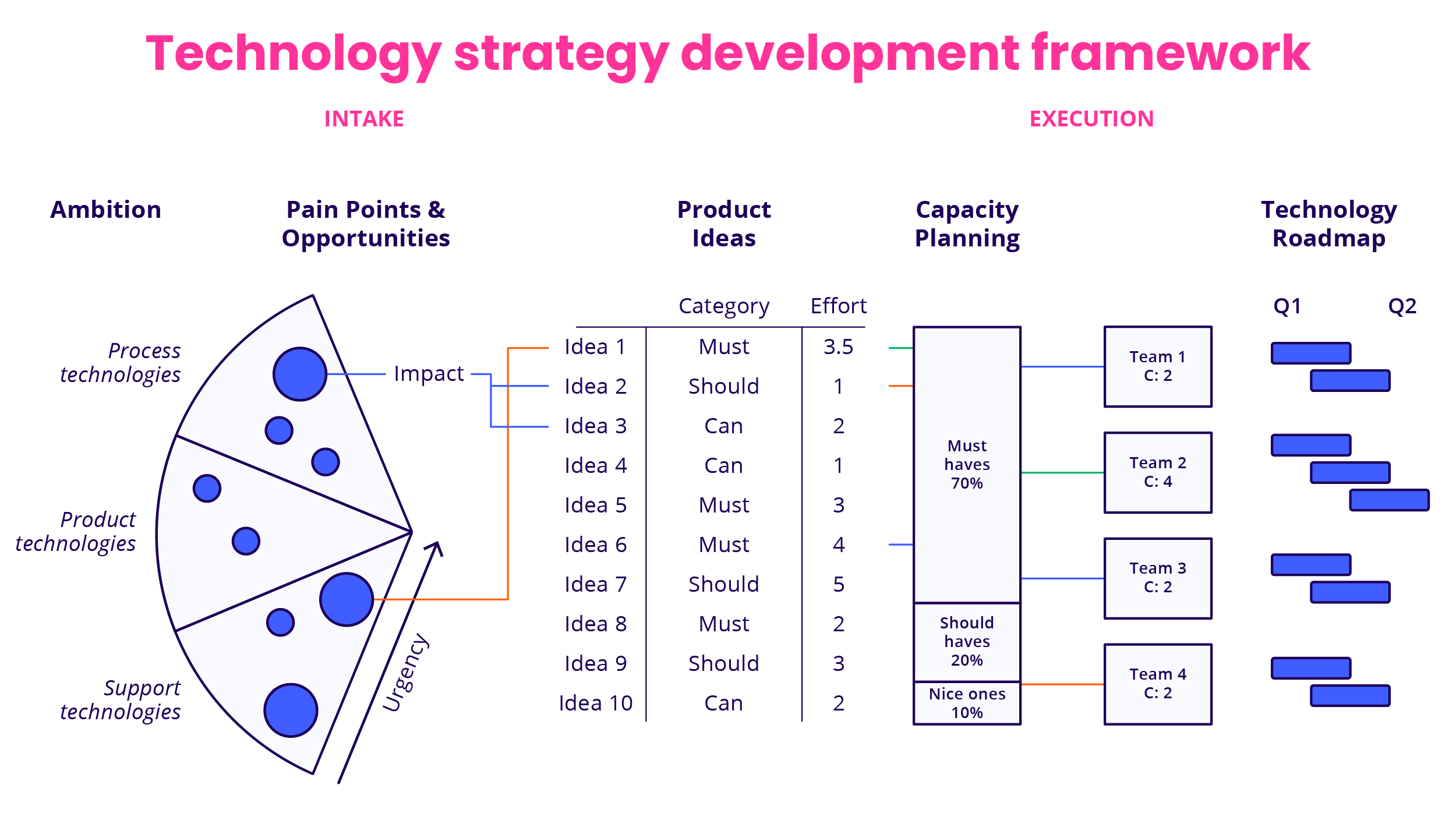
Exhibit 3: Technology strategy framework linking business ambition, prioritized ideas, capacity planning, and roadmap execution.
Creating and executing a technology strategy requires cross-functional collaboration:
Early engagement builds internal support and clarifies decision rights: who can propose changes, who must approve them, and how conflicts get resolved.
Technology budgets are finite. Effective strategies include explicit frameworks for prioritizing investments:
Leading organizations use portfolio management approaches to balance initiatives across these dimensions. They maintain a mix of quick wins that demonstrate value, foundational investments that enable future innovation, and longer-term bets on emerging technologies.
The framework should also address the operating model: how teams collaborate, make decisions, and deliver outcomes. Without this clarity, even well-funded initiatives stall in organizational dysfunction.
Not all initiatives deliver equal value. Prioritize based on:
Use a scoring framework to make prioritization transparent and defensible. Balance quick wins with foundational investments—early successes build momentum for larger transformations.
The roadmap connects strategy to execution by mapping initiative sequencing (what happens when, and in what order), dependencies (what must be completed before subsequent work begins), resource allocation (who's working on what, and when), and business outcome connections (which business metrics each initiative will impact).
Effective roadmaps serve multiple audiences:
Strong roadmaps show multiple timeframes: near-term priorities (0-12 months), mid-term capabilities (1-3 years), and long-term vision (3-5 years).
Update the roadmap regularly. Quarterly reviews assess whether current initiatives still serve business objectives. Annual reviews reconsider fundamental assumptions.
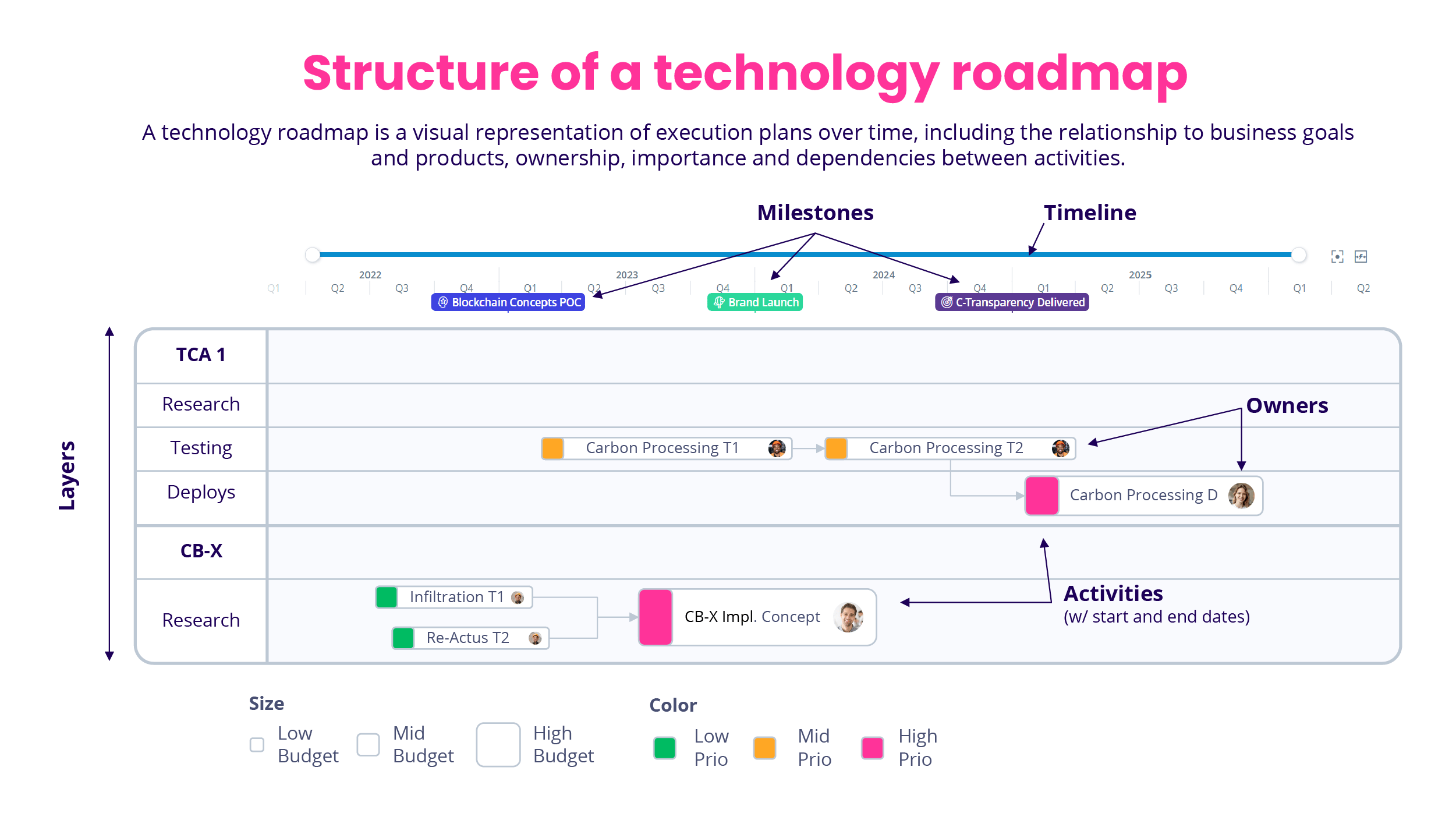
Exhibit 4: Technology roadmap structure linking layers, owners, priorities, and milestones to align stakeholders and allocate resources.
Four companies demonstrate how focused technology strategies aligned with business objectives create measurable competitive advantage. Each faced different challenges but shared common characteristics: explicit connection between investments and value, phased execution, and willingness to change operating models alongside technical capabilities.
Challenge: Automotive manufacturers needed advanced cathode active materials to enable longer-range, faster-charging electric vehicles while managing supply chain complexity.
Strategy: Develop integrated battery materials technology combining chemistry innovation, production process development, and recycling capabilities across the EV value chain.
Execution:
Built a global R&D network focused on cathode active materials chemistry and performance optimization
Results:
Cathode materials enabling 600km+ range versus 300km baseline
Key insight: BASF succeeded by treating battery materials as a complete value chain challenge, integrating R&D, production scale-up, supply chain partnerships, and end-of-life recycling into a cohesive system.
Challenge: Traditional footwear manufacturing locked designs at production time, preventing biomechanical optimization and requiring complex assembly of multiple components.
Strategy: Deploy advanced 3D printing technology enabling mass customization of performance footwear with variable material properties tuned to athlete biomechanics.
Execution:
Partnered with Carbon to adapt Digital Light Synthesis technology for elastic materials and lattice structures
Developed proprietary material formulations meeting durability and performance requirements
Built an athlete data platform using motion capture and foot scanning to inform functional zone design
Results:
Monolithic midsole designs previously impossible with traditional manufacturing
Key insight: Adidas viewed 3D printing not as a prototyping tool but as a production method enabling entirely new product architectures through integration of materials science, biomechanical data, and manufacturing process development.
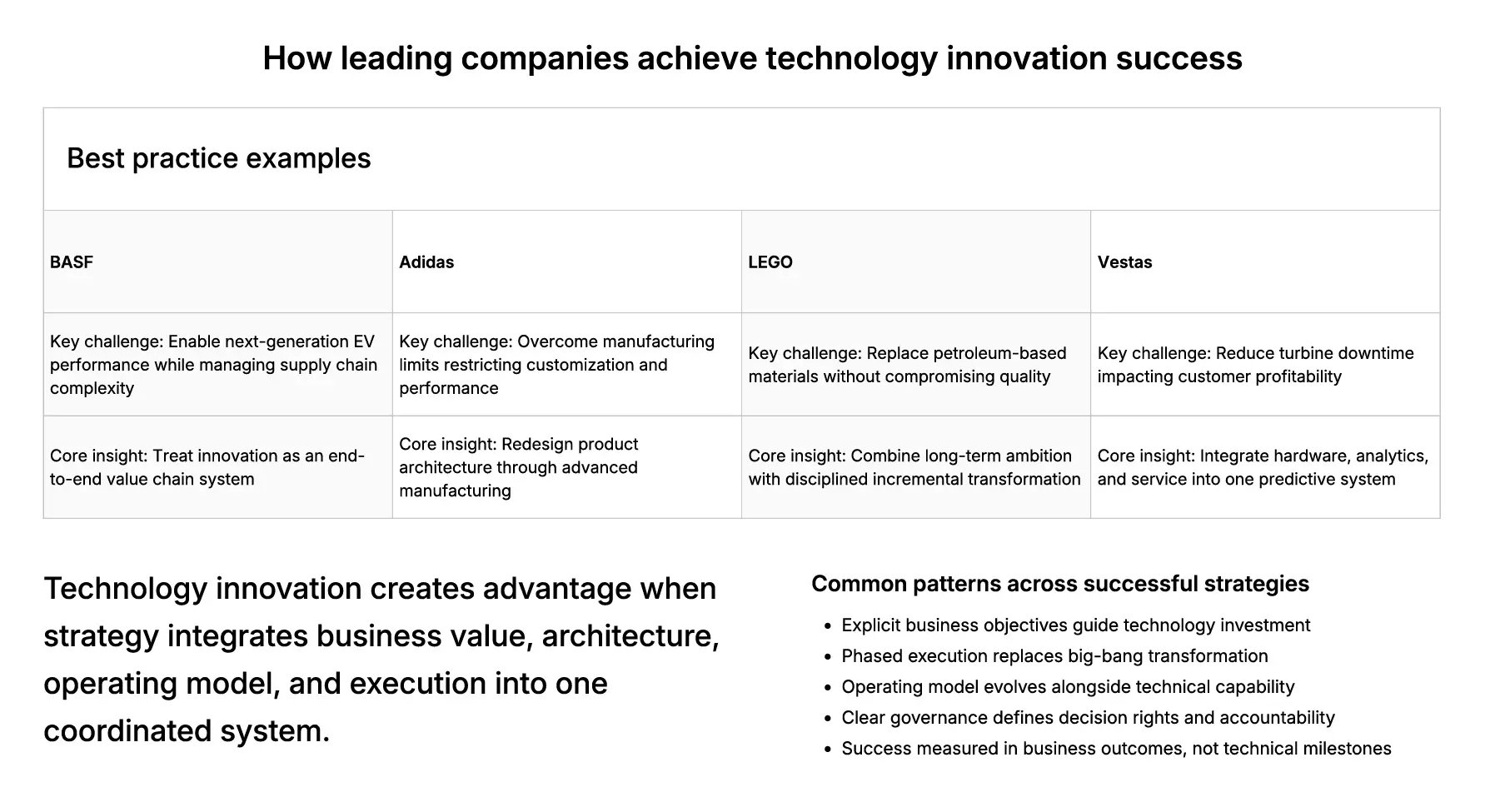
Exhibit 5: Leading companies’ technology strategies, showing core challenges, strategic insights, and shared success patterns.
Challenge: Core product made from petroleum-based ABS plastic represented significant carbon footprint, but replacement materials had to match rigorous quality, safety, and "clutch power" requirements across 3,400 shapes and 60 colors.
Strategy: Develop a portfolio of renewable and recycled materials through systematic R&D while maintaining product performance standards established over 75 years.
Execution:
Tested 600+ alternative materials over a multi-year period to identify viable candidates
Results:
22% of materials from renewable or recycled sources (up from 12% in 2023) toward 2032 goal of 100%
150 different LEGO elements manufactured from sustainable materials
Challenge: Wind turbine downtime significantly impacted energy production economics and customer profitability.
Strategy: Leverage IoT sensors and machine learning to predict component failures and optimize maintenance scheduling.
Execution:
Instrumented turbines with comprehensive sensor arrays monitoring mechanical and electrical systems
Results:
Reduced unplanned downtime through predictive interventions
Key insight: Vestas balanced hardware instrumentation with software analytics capabilities. The technology strategy succeeded because it addressed the complete value chain from sensors through analytics to service delivery, coordinating product engineering, IT infrastructure, and service operations.
All four examples share critical characteristics:
Technology strategy without execution is just expensive documentation. The gap between strategic planning and actual results closes through three critical mechanisms.
First, roadmaps that translate vision into concrete actions. Second, stakeholder alignment that maintains commitment through inevitable challenges. Third, measurement systems that track results rather than technical outputs.
For R&D and innovation leaders, mastering these execution essentials determines whether strategies transform organizations or simply consume resources. Implementation discipline matters more than strategic sophistication. The right tools and governance structures make the difference.
Exhibit 6: ITONICS roadmap software linking initiatives, dependencies, and milestones across timelines and capability layers.
Emerging technologies create opportunities to differentiate, but chasing trends wastes resources. Strong technology lifecycle management requires:
Systematic scanning: Monitor innovations relevant to your industry
The strategic question isn't whether to adopt emerging technologies, but whether they solve real problems aligned with business priorities.
Technology investments must connect to business value. Use clear criteria: What business metrics will this move? What happens if we delay? How does this support strategic objectives? What's the expected ROI?
Review your portfolio quarterly. Market conditions shift, competitive pressures evolve, and customer demand changes. Your investment mix should adapt accordingly while maintaining strategic coherence.
A brilliant strategy that nobody understands delivers no value. Effective communication means tailoring messages to different audiences (executives need business impact, technical teams need architectural clarity), showing connections between technology initiatives and outcomes people care about, creating feedback loops so strategy evolves based on ground-truth from implementation teams, and maintaining consistency across all communications to prevent confusion.
Regular updates keep the strategy alive as a living document rather than a static plan that gathers dust. Strategy reviews should bring stakeholders together to reassess priorities, discuss market changes, and adjust course when needed.
The goal isn't consensus on every decision; that's neither possible nor desirable. The goal is a shared understanding of strategic direction, clear decision rights, and commitment to execute.
Many strategies measure the wrong things: features shipped, systems deployed, budgets spent. This creates perverse incentives where teams optimize for outputs that don't drive business value.
Define success in business terms:
Customer-facing initiatives: Track improved satisfaction scores, increased loyalty, and higher conversion rates
Connect metrics explicitly to initiatives. When implementing automation, track actual time savings and error reduction, not just automated task counts.

Exhibit 7: ITONICS R&D dashboard connecting portfolio metrics, emerging tech tracking, and ROI to measurable business outcomes.
Managing complex technology strategies through spreadsheets and presentations creates unnecessary friction. As strategies scale, this approach breaks down.
Purpose-built platforms solve these problems by streamlining roadmap creation, enabling real-time collaboration, integrating market intelligence with internal priorities, and maintaining strategic alignment as conditions evolve.
Shared workspaces that eliminate version control issues
Technology trend monitoring
Organizations using purpose-built platforms report 40-60% reduction in time spent on roadmap management, faster decision-making due to shared visibility, better stakeholder alignment through consistent communication, and higher strategy execution rates through clearer accountability.
For organizations managing technology budgets of $10M+, platform investment typically pays for itself within the first year through improved resource allocation and reduced waste.

Exhibit 8: Best-in-class platform capabilities showing how planning, collaboration, intelligence, and governance enable strategy execution.
A successful technology strategy transforms how organizations create value. It connects investments to measurable results, aligns stakeholders around shared objectives, and balances quick wins with long-term capability building.
For C-level executives in R&D, innovation, and product management, success requires platforms that streamline planning and free energy for strategic thinking, processes that engage stakeholders and maintain alignment, discipline to measure business outcomes rather than technical outputs, governance structures with clear decision rights and accountability, and regular reviews that keep the strategy responsive to changing conditions.
The organizations that master these elements systematically outperform their peers. They make faster decisions, waste fewer resources, and adapt more successfully as markets shift.
The question isn't whether to invest in a technology strategy. Every organization already does, whether intentionally or not. The question is whether that investment creates value or merely creates complexity. The answer depends on execution.
Platforms like ITONICS help R&D and innovation leaders develop roadmaps faster, collaborate more effectively, and keep strategies aligned with evolving business requirements. The result: less time managing documents, more time creating value through better decisions.